Forage & Feed Crops
Crop production at Grey Barn Farm exists primarily to support livestock health and long-term land function. The majority of our row crops and forage are grown for on-farm use rather than for external markets. This allows planting, harvest, and rotation decisions to be guided by animal needs and soil conditions rather than by yield targets alone.
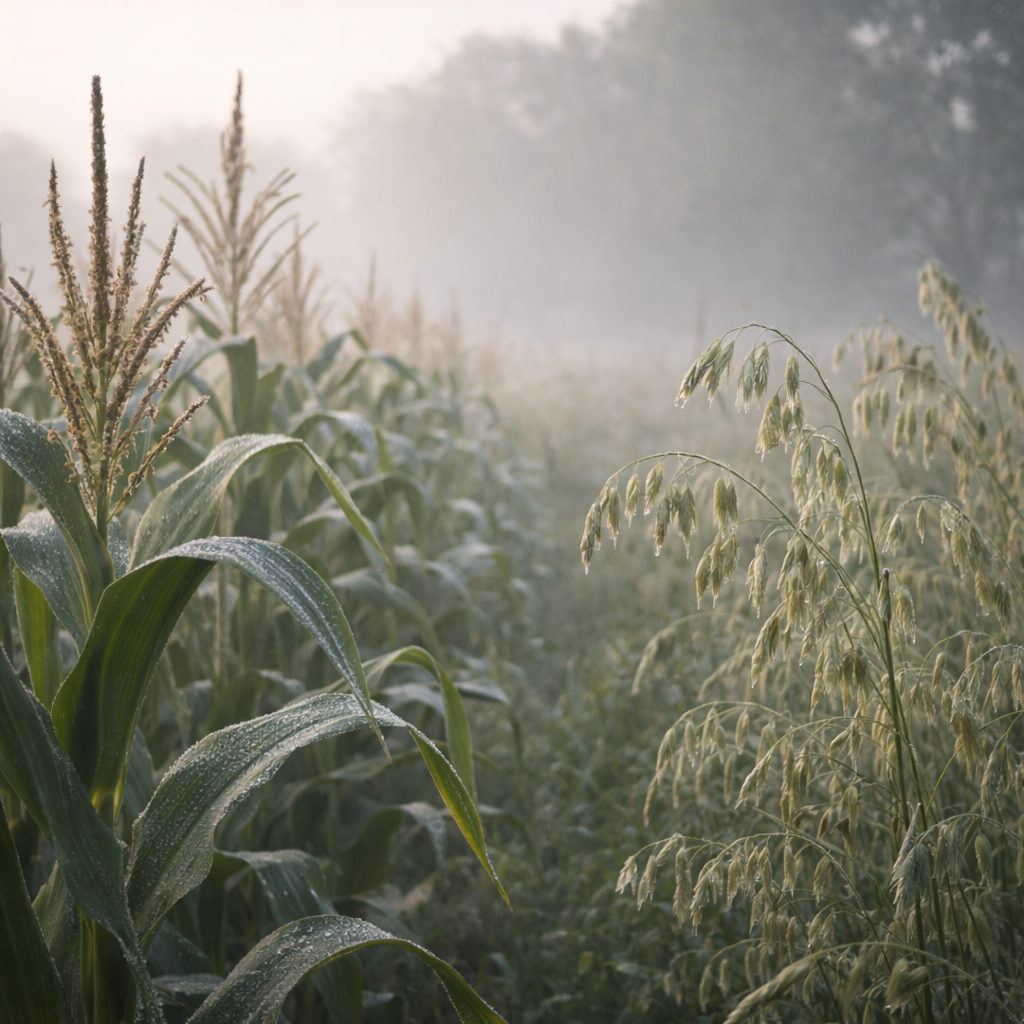
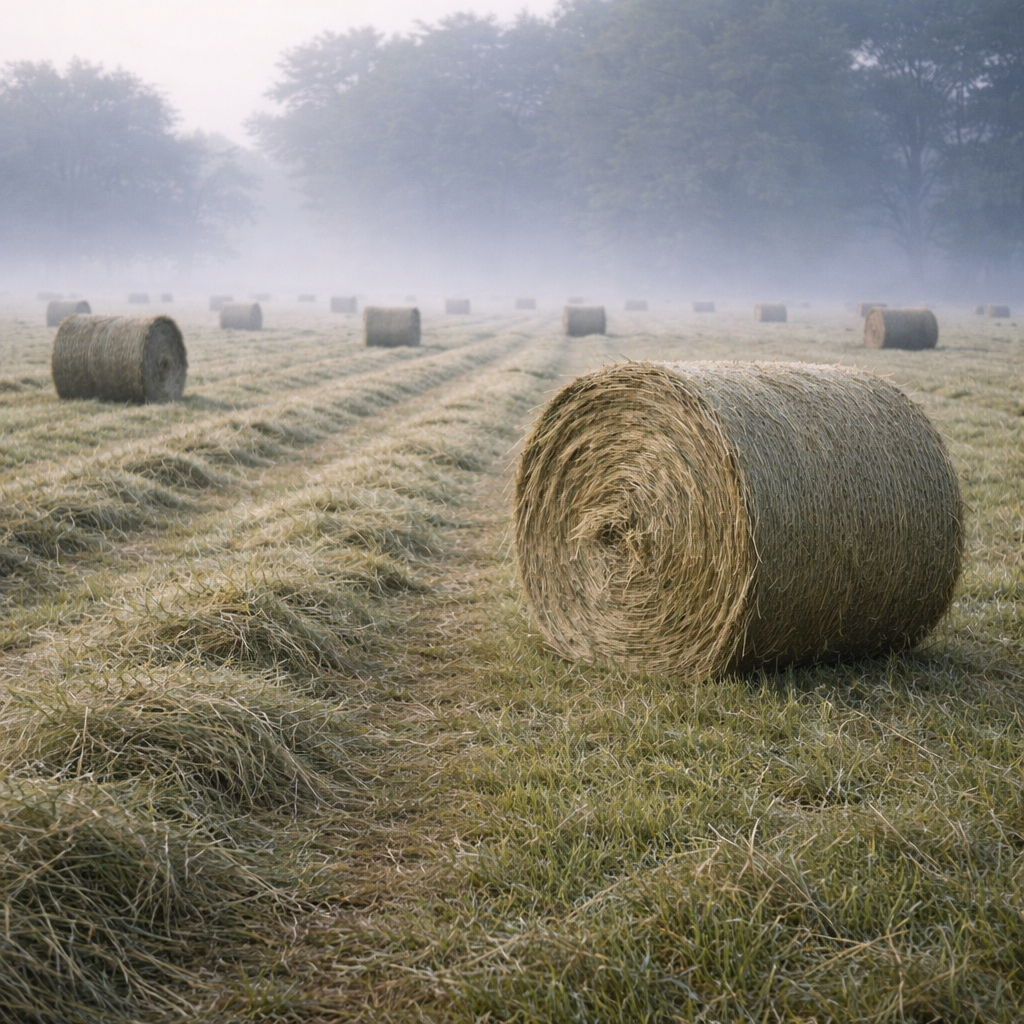
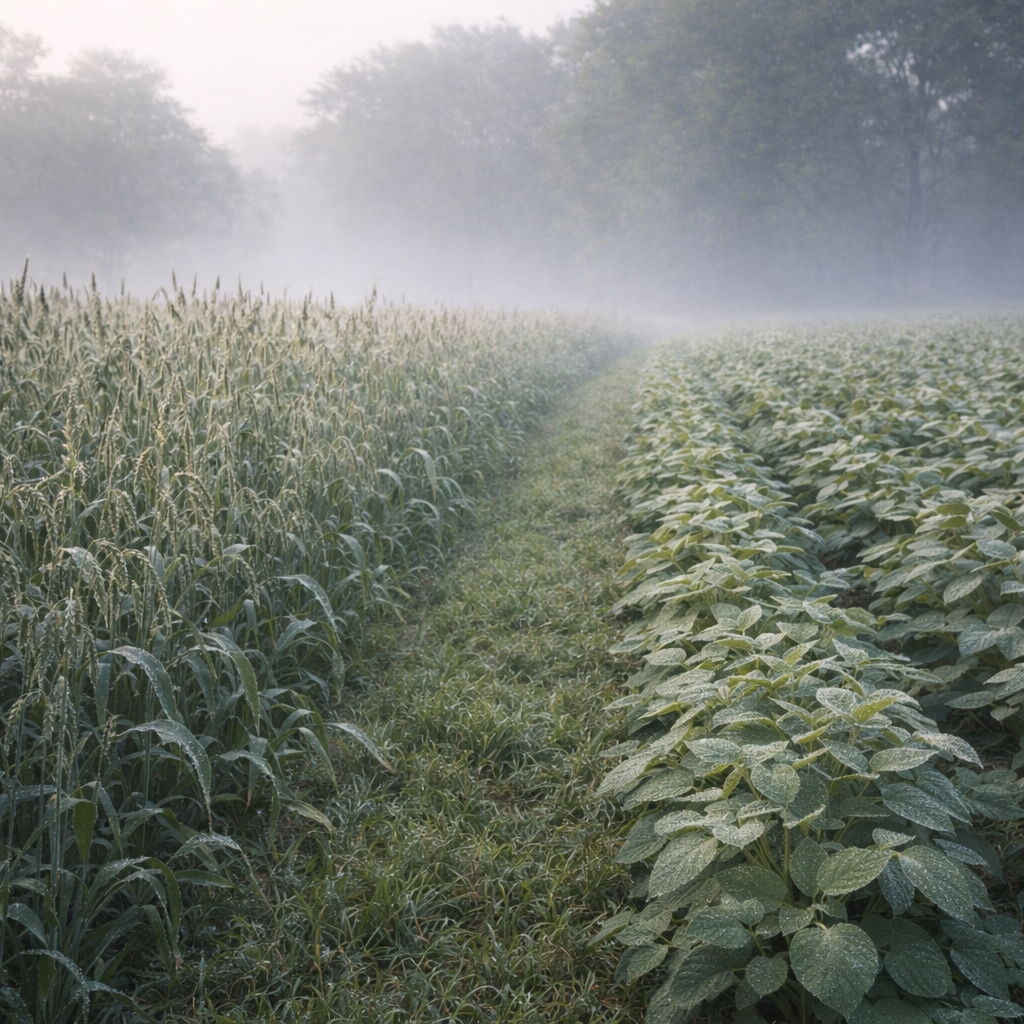
Primary crops include corn, soybeans, grain sorghum (milo), oats, and hay. Together, these provide a flexible feed base that supports different species, life stages, and seasonal requirements. Grain and forage are used in combinations appropriate to each herd or flock, with adjustments made based on weather, pasture availability, and animal condition.
Fields are rotated regularly and are not kept in continuous production. Many parcels are rested for one or more growing seasons, allowing soil structure, microbial activity, and native plant communities to recover. These rest periods are treated as an essential part of the production cycle rather than as lost time.
Management emphasizes timing and restraint. Planting density, harvest schedules, and field use are adjusted to avoid unnecessary soil disturbance and nutrient loss. Crop residue and cover are left in place where possible to protect the soil surface and maintain moisture.
Forage and feed production is understood as a support system rather than a standalone enterprise. By integrating crops with livestock needs and land recovery, the farm maintains a closed-loop approach that favors resilience over maximum output.
For additional detail on how fields are managed, rested, and recorded over time, see the
Field Stewardship page.