Oats
Overview
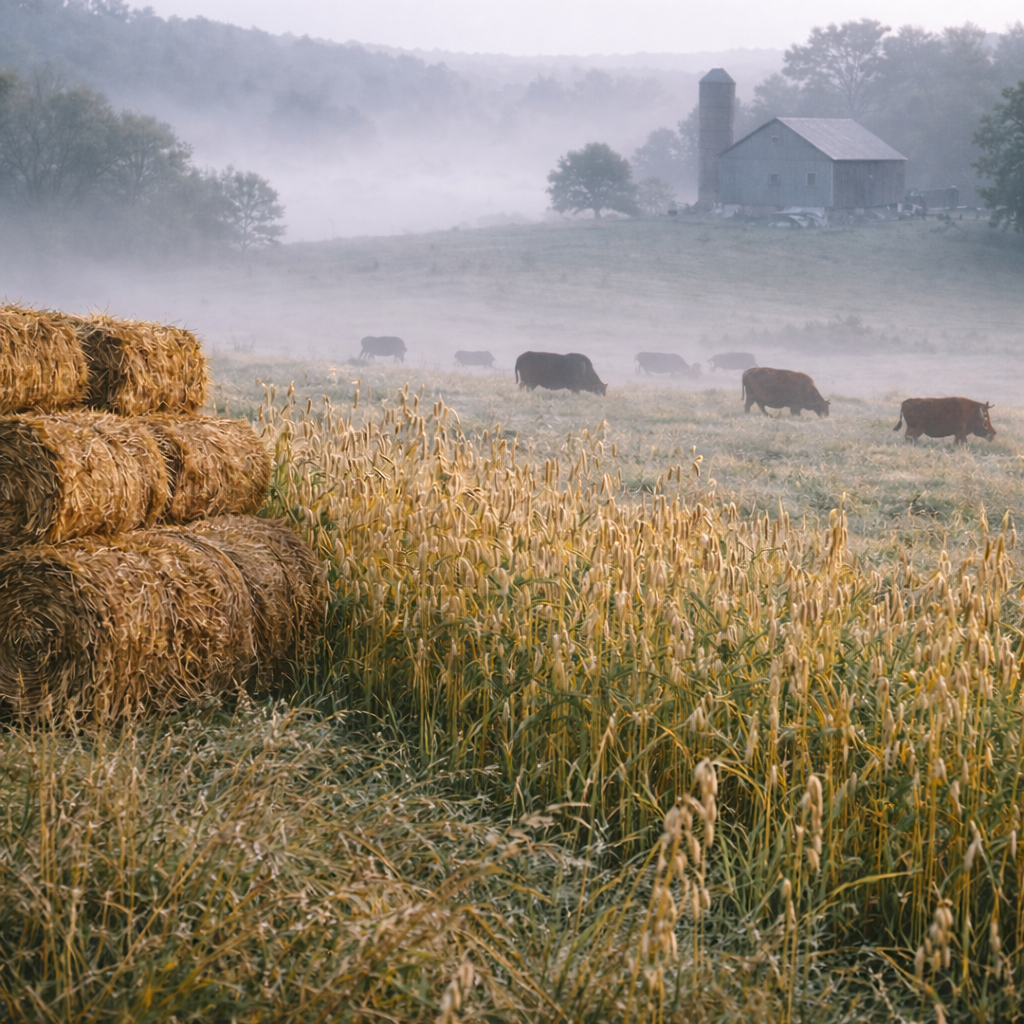
Oats play a versatile and deliberately modest role within the field system at Grey Barn Farm. They are grown to support livestock needs across multiple uses, rather than as a single-purpose or dominant crop. Their value lies in adaptability - serving as feed grain, forage, and a source of straw - while fitting into field sequences that prioritize soil condition, timing, and long-term function.
Oats are not planted on a fixed schedule or acreage. Decisions about whether and where they appear are shaped by field history, seasonal conditions, and how a particular field fits into the broader balance of forage, grain, and rest across the farm.
Role Within the Livestock System
Oats are used primarily as a feed grain, contributing energy and diversity to on-farm rations. Their inclusion is adjusted based on livestock species, seasonal needs, and the availability of other feeds such as corn, hay, and pasture. Rather than forming a constant baseline, oats are incorporated where they make practical sense within a given year.
In addition to grain use, oats are also grown as forage when timing and conditions favor early or flexible feed. This dual role allows fields to support livestock without committing to a longer-season crop, particularly in years when weather patterns or rotation goals favor shorter-term options.
After harvest, oat straw is collected and used as animal bedding. This closes another loop within the system, allowing a single crop to meet both nutritional and husbandry needs while reducing reliance on outside inputs.
Placement Within Field Sequences
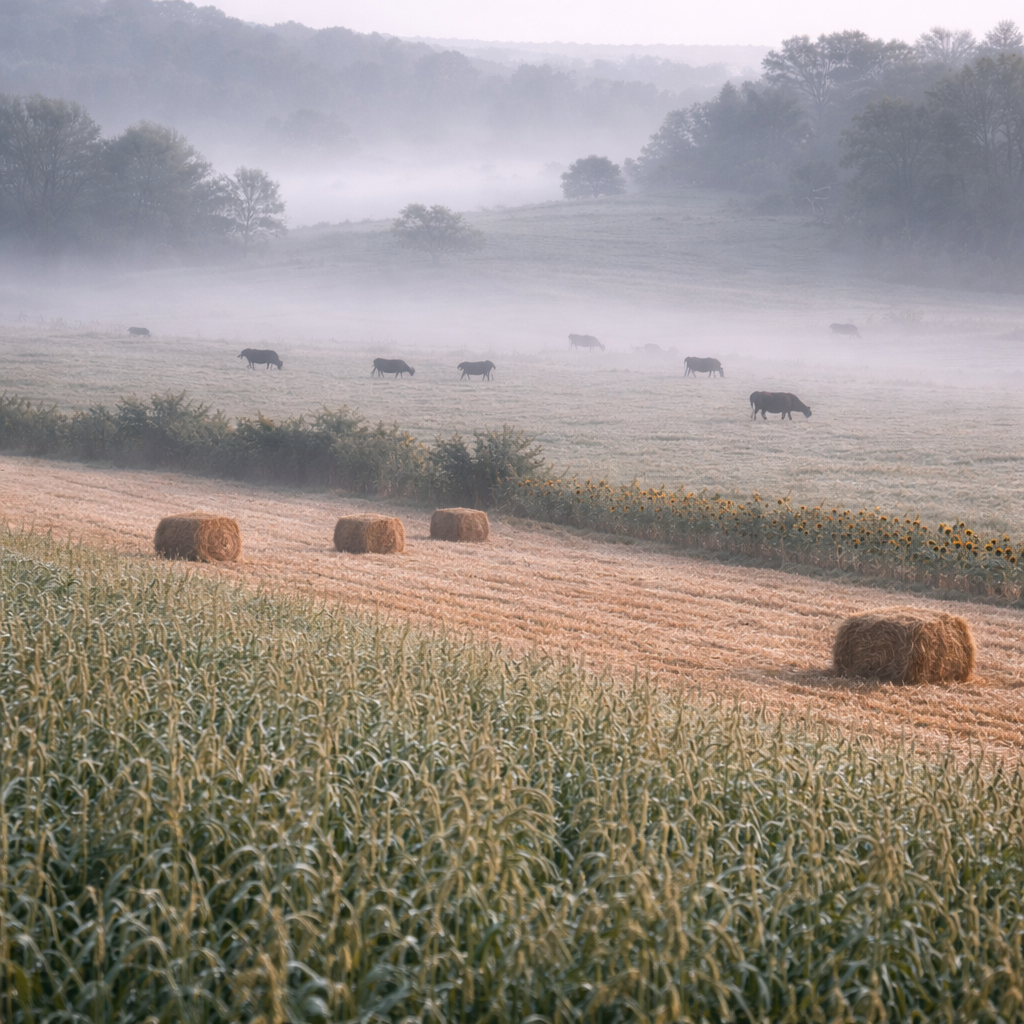
Oats are frequently used as a transitional crop within longer field sequences. They may follow heavier-use crops or precede forage, hay, or rest periods, helping stabilize soil structure while keeping ground productive. Their relatively shallow rooting and shorter growing season make them well suited to fields that benefit from reduced intensity.
Placement varies year to year. Some fields carry oats only occasionally, while others may see them recur when conditions align. There is no expectation that oats remain in any single field beyond their usefulness within that specific moment in the rotation.
Soil Interaction and Field Response
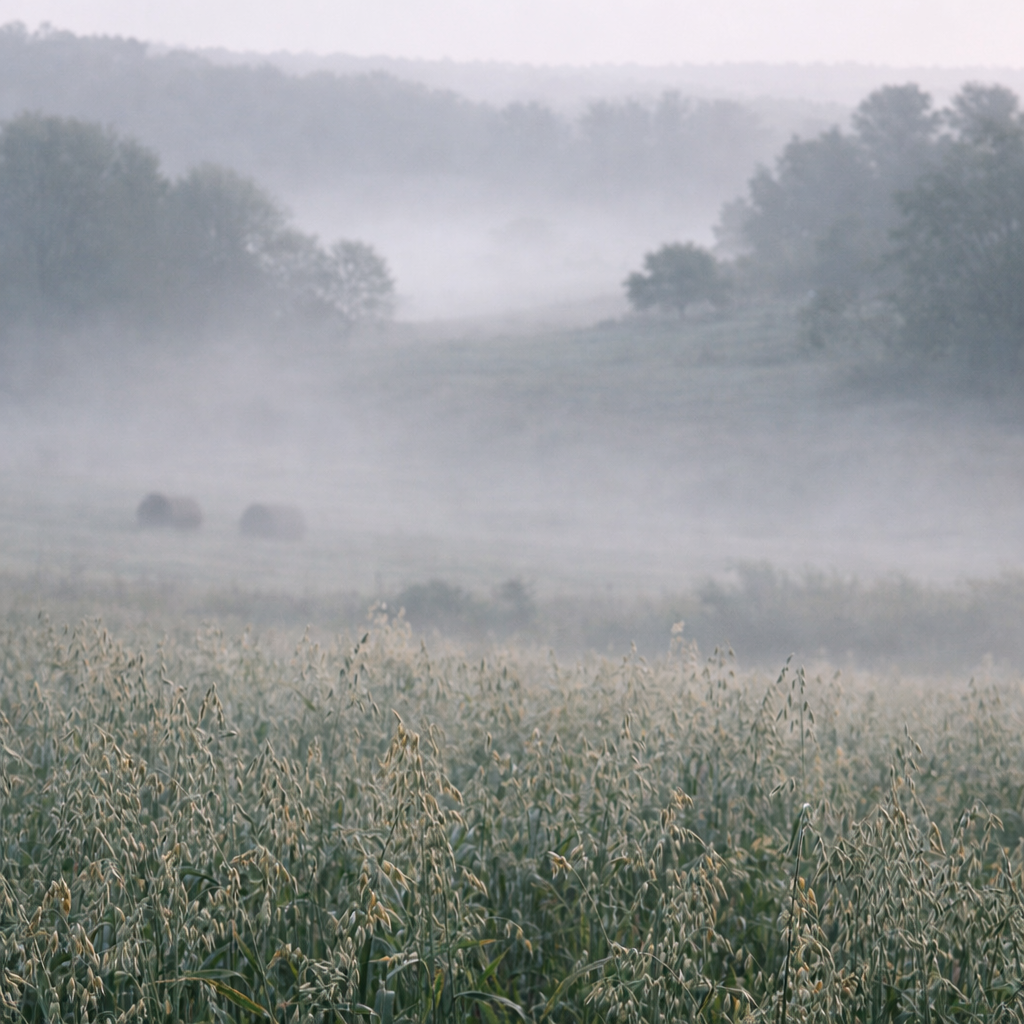
Oats are selected in part for their gentle interaction with the soil. They establish quickly, provide early cover, and help protect the surface during periods when ground might otherwise remain exposed. This makes them particularly useful in seasons with uncertain weather or when fields are transitioning between longer-term uses.
Field response is observed closely. Stand vigor, residue levels, and soil structure after harvest all inform whether oats remain a good fit for a given field or whether another crop or rest period would be more appropriate the following year.
Harvest, Straw, and Use
Harvest decisions balance grain maturity, field condition, and weather outlook. As with other crops on the farm, protecting soil structure takes priority over rigid timing. Harvest may be delayed or accelerated to avoid compaction or surface damage.
Following harvest, straw is baled and stored for use as animal bedding. Straw quality, cleanliness, and storage stability are emphasized over maximum yield. Bedding use is planned alongside forage and feed needs, reinforcing the role of oats as a multi-purpose crop rather than a single-output enterprise.
Inputs and Management
Inputs for oats are kept conservative. Nutrient applications are guided by soil testing, field history, and observed crop response rather than standardized recommendations. Manure and amendments are applied selectively where they support both the crop and longer-term soil function.
Chemical inputs are used sparingly. Weed pressure and stand performance are evaluated as indicators of timing, field condition, and rotation effectiveness rather than addressed in isolation.
Weather and Flexibility
Oats are particularly sensitive to seasonal variability, and management reflects this reality. Cool, wet springs, dry windows, and harvest-time weather all influence outcomes. Rather than attempting to force uniform results, variability is accepted and incorporated into planning.
In some years, oats perform well as both grain and forage; in others, their value lies primarily in one role or another. Adjusting expectations is treated as part of responsible field stewardship.
Records and Continuity
As with other fields, oat plantings are tracked alongside soil tests, amendments, weather patterns, and harvest outcomes. These records preserve field-specific knowledge over time, allowing future decisions to build on observed response rather than assumption.
Patterns across multiple seasons help determine whether oats remain a useful option for a particular field or whether rotation, rest, or alternative use would better serve long-term goals.
Oats in a Long View
At Grey Barn Farm, oats are valued for their flexibility rather than their scale. By serving as feed grain, forage, and bedding material, they contribute across multiple parts of the livestock system without placing excessive demands on land or management.
Success is measured by how smoothly oats integrate into field sequences and livestock needs, supporting resilience and continuity rather than maximum output.