Field Peas
Overview
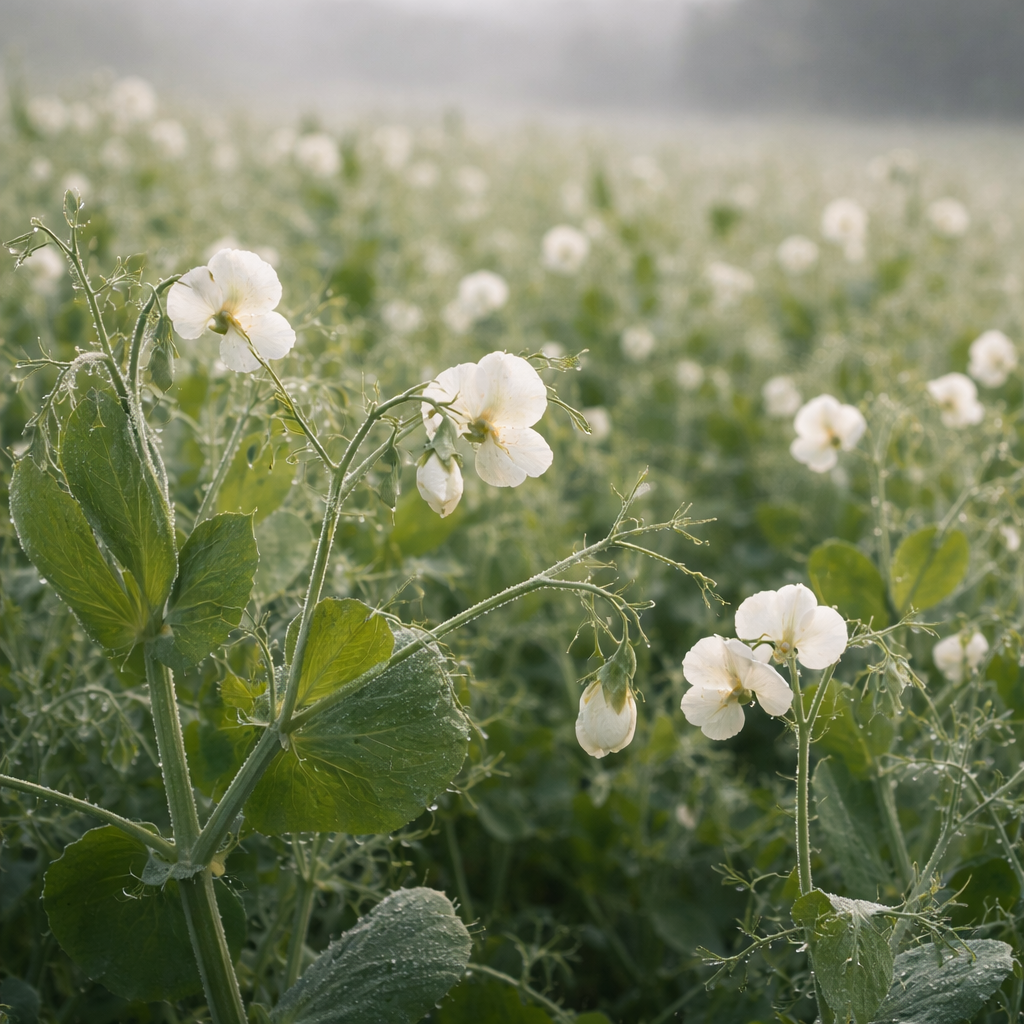
Field peas serve a focused and seasonal role within the field system at Grey Barn Farm. They are planted primarily as an early-season forage crop, supporting cattle and goats during periods when perennial pasture growth is still developing or when additional green feed improves balance across the system. Rather than being managed for grain harvest or long-term field occupancy, field peas are used as a short-duration crop that fits naturally into transitional windows.
Their value lies in timing and function. Field peas are chosen for what they provide early in the growing season - rapid vegetative growth, high-quality forage, and soil engagement - rather than for persistence or yield at maturity. As with other crops on the farm, their use is situational and responsive rather than routine.
Role Within the Livestock System
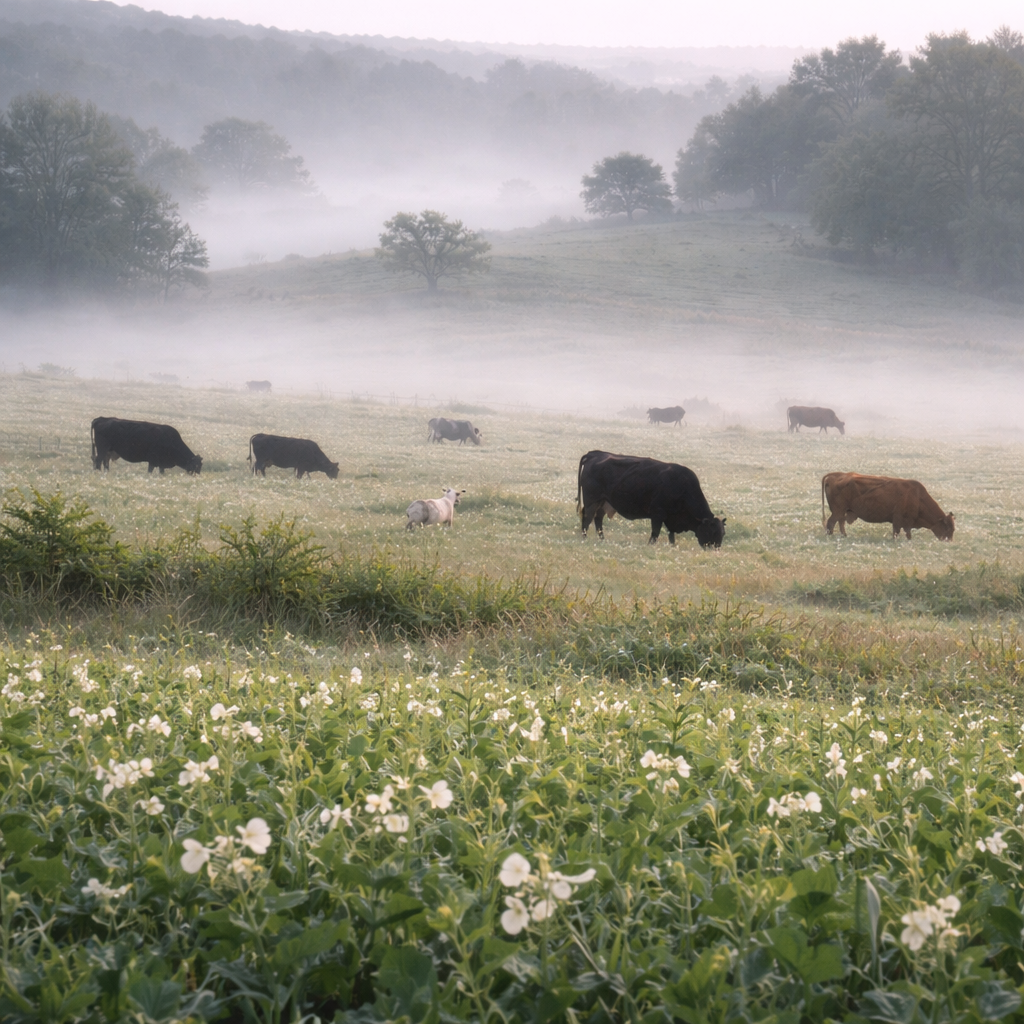
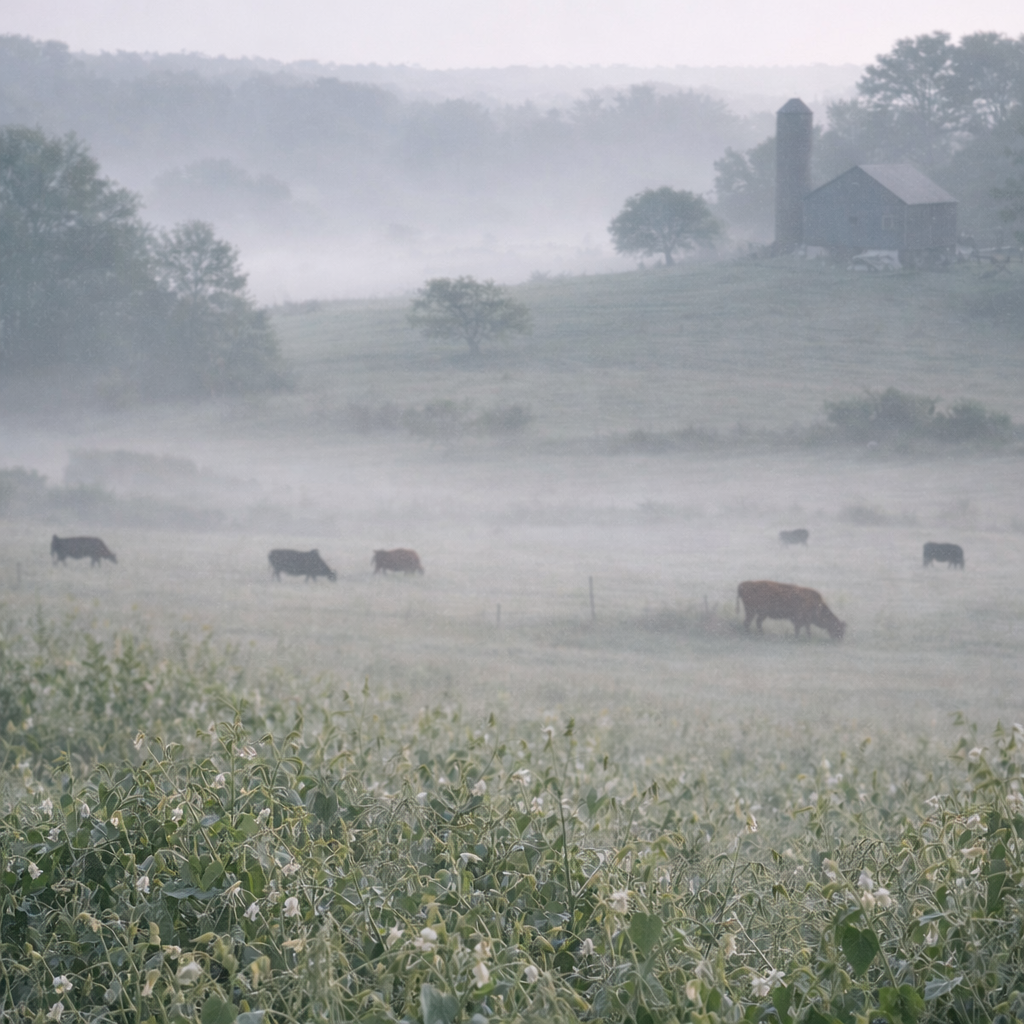
At Grey Barn Farm, field peas are grown primarily for direct forage use. They are grazed or harvested to support cattle and goats at times when forage demand outpaces pasture availability, particularly in early spring or during cooler growing periods. Their palatability and nutritional profile make them well suited to this role, especially for animals transitioning out of winter feeding programs.
Field peas are not relied upon as a primary feed source, nor are they expected to carry livestock through an entire season. Instead, they function as a bridge - adding flexibility, reducing pressure on permanent pastures, and smoothing seasonal transitions within the forage system.
Early-Season Placement
Field peas are typically planted earlier than many other crops on the farm, taking advantage of cooler soil temperatures and early moisture. Their ability to establish quickly under these conditions allows them to occupy ground that might otherwise sit idle while waiting for warmer-season crops.
This early placement is intentional. By engaging the soil surface sooner, field peas contribute to ground cover, biological activity, and early nutrient cycling without committing the field to a long growing season. Once their forage role is fulfilled, fields are either rested or transitioned into the next phase of use.
Field Selection and Conditions
Not all fields are suitable for field peas in a given year. Selection is guided by drainage behavior, compaction risk, residue levels, and how the field performed in previous seasons. Fields that benefit from early cover or that are coming out of heavier use are often considered good candidates.
Conversely, fields that show signs of stress, poor structure, or delayed recovery may be rested instead. The decision to plant field peas is always weighed against whether active use or additional recovery best serves the field at that moment.
Rotation and Sequencing
Field peas are never treated as a standalone or repeating crop. Their role is inherently rotational and transitional. They may follow a period of rest, precede a forage stand, or serve as an intermediate step between heavier-use crops.
Because their growing window is relatively short, they allow for flexibility in sequencing. In some years, a field may move from peas into pasture or hay; in others, it may be rested entirely after pea use. These decisions are made at the field level, informed by observation rather than by preset rotation plans.
Soil Engagement and Surface Management
Although field peas occupy fields briefly, attention to soil surface condition remains a priority. Residue from prior crops is retained where possible, and planting methods are chosen to minimize disturbance and compaction risk, especially in early-season conditions when soils may still be vulnerable.
The goal is not visual uniformity but functional engagement. Even short-duration crops are expected to contribute positively to soil structure, biological activity, and surface protection.
Inputs and Management Intensity
Field peas are managed with a light footprint. Nutrient inputs are minimal and guided by soil testing and field history rather than standardized application rates. Amendments are applied only when there is a clear benefit to long-term field function.
Chemical inputs are used infrequently. Weed pressure is evaluated in the context of timing, residue, and soil condition rather than addressed through routine intervention. In many cases, early canopy development and short use duration reduce the need for additional control.
Forage Use and Exit Timing
Use of field peas is timed to maximize forage value while avoiding unnecessary stress to the field. Grazing or harvest is paced to support animal needs without pushing stands beyond their functional role.
Once field peas have served their purpose, fields are allowed to transition. This may involve rest, follow-on planting, or return to pasture, depending on conditions. Ending use at the appropriate time is considered as important as establishment.
Records and Field History
Field pea plantings are documented alongside other crops and livestock using FarmBrite, with records tracking planting timing, field conditions, forage use, weather context, and observed response. These records help clarify where field peas have been effective and where alternative approaches may be better suited in future seasons.
Over time, this accumulated history informs whether field peas remain a useful tool for a given field or whether changes in timing, placement, or omission better support long-term goals.
Field Peas in a Long View
At Grey Barn Farm, field peas are valued for precision rather than scale. Their success is measured by how well they support livestock during specific windows, how gently they engage the soil, and how smoothly they integrate into longer field sequences.
They are not planted every year, nor in every field. When they appear, they do so with purpose - supporting animals, protecting land, and reinforcing a system built on responsiveness rather than repetition.