Grain Sorghum (Milo)
Overview
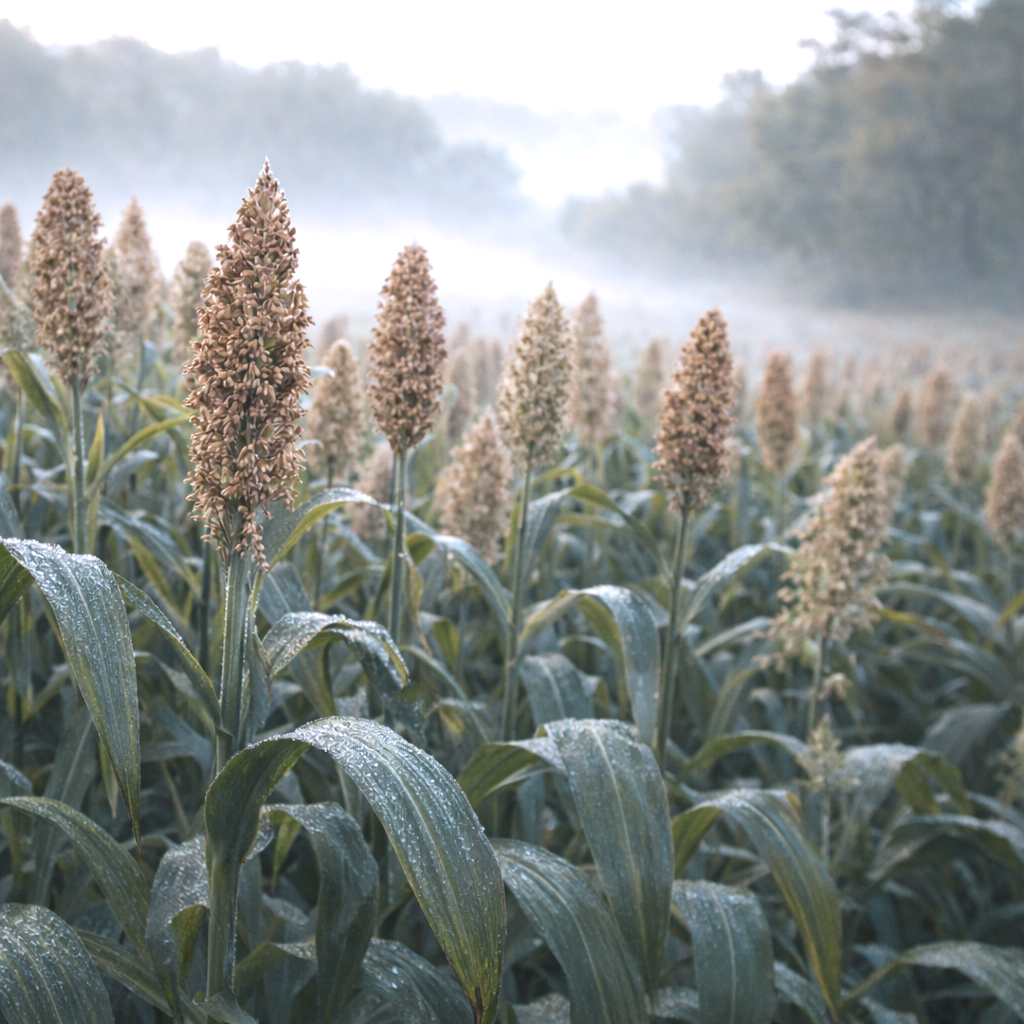
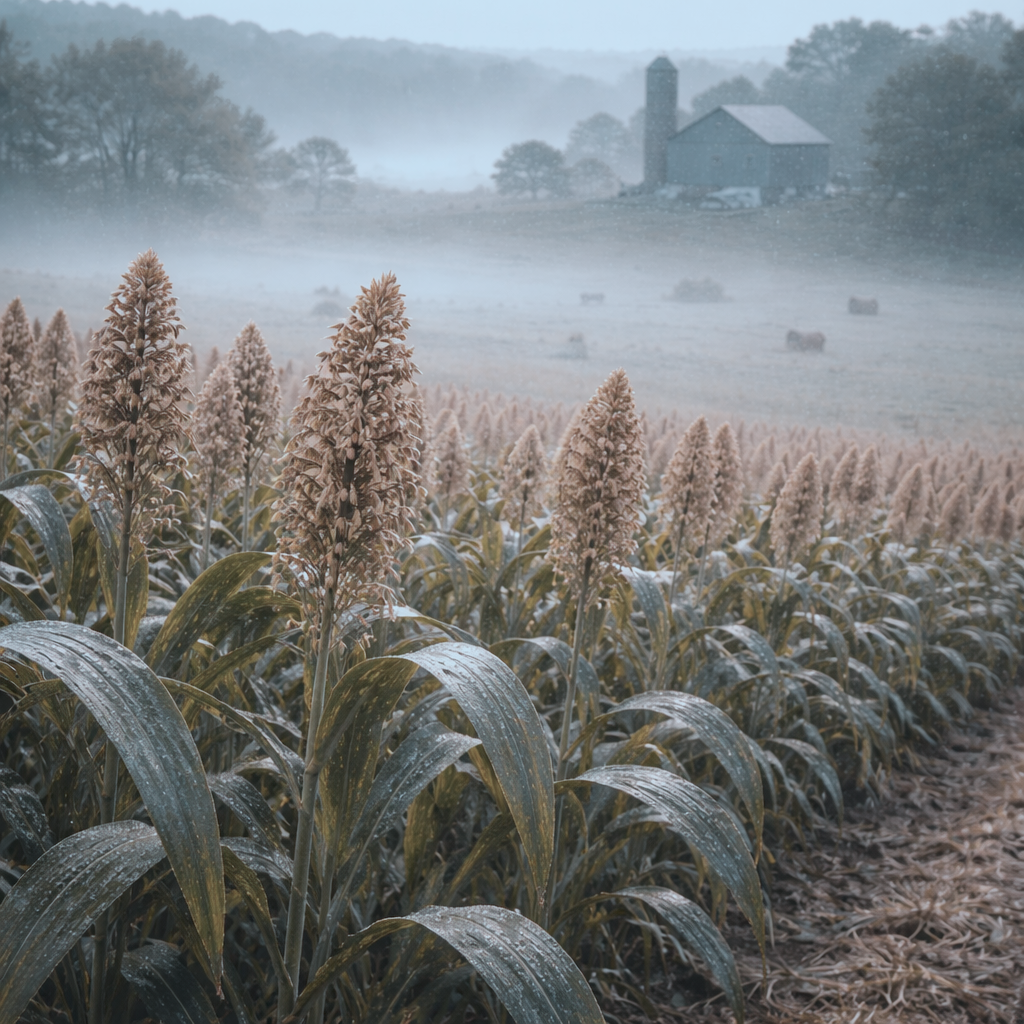
Grain sorghum occupies a situational and deliberately limited role within the field system at Grey Barn Farm. It is grown when field conditions, weather patterns, and longer rotation needs favor a crop that performs reliably under heat and variable moisture. Like other crops on the farm, grain sorghum is used selectively rather than routinely, with decisions shaped by field response rather than by fixed planting plans.
The crop is commonly referred to as milo, a name that reflects long-standing regional usage rather than a different plant. In many parts of the central United States, grain sorghum has historically been known by this name, and both terms are used interchangeably to describe the same grain.
Role Within the Livestock System
At this farm, grain sorghum is grown primarily to support livestock feeding needs. Its tolerance for hot and dry conditions makes it a useful option in seasons when other grains are less reliable, helping maintain feed continuity without increasing pressure on pasture or forage reserves.
The amount grown varies year to year. Acreage is tied to anticipated on-farm use, storage considerations, and how individual fields have performed historically, rather than being held at a consistent level across seasons.
Global Importance, Local Use
Although grain sorghum is relatively unfamiliar to many people outside regions where it is commonly grown, it is one of the most important cereal crops worldwide and is often cited as the fifth most widely produced grain globally. Its global role reflects adaptability across diverse climates and farming systems.
On this farm, however, its significance is measured locally. Value is determined by how well it fits specific fields, how reliably it supports livestock needs, and how it contributes to longer rotation and recovery patterns, rather than by its standing among global crops.
Field Selection and Timing
Field selection for grain sorghum reflects soil structure, drainage behavior, residue levels, and accumulated field history. Fields that tolerate warmer conditions or benefit from a crop resilient to moisture variability are more likely to be considered. Fields showing signs of compaction or in need of extended recovery may be rested or placed into a different use instead.
Planting decisions are paced by soil temperature, moisture, and forecast conditions rather than calendar targets. Delays or changes in plan are treated as expected outcomes when conditions warrant caution.
Rotation and Sequencing
Grain sorghum is never treated as a continuous crop. Its placement within rotation varies by field and year, often fitting between heavier-use crops and periods of forage or rest. Sequences are adjusted as field response becomes clearer over time.
Rather than following uniform crop cycles, rotation decisions emphasize soil structure, residue management, and biological recovery. In some seasons, grain sorghum serves as a transitional crop; in others, it is omitted entirely.
Soil Surface and Residue Management
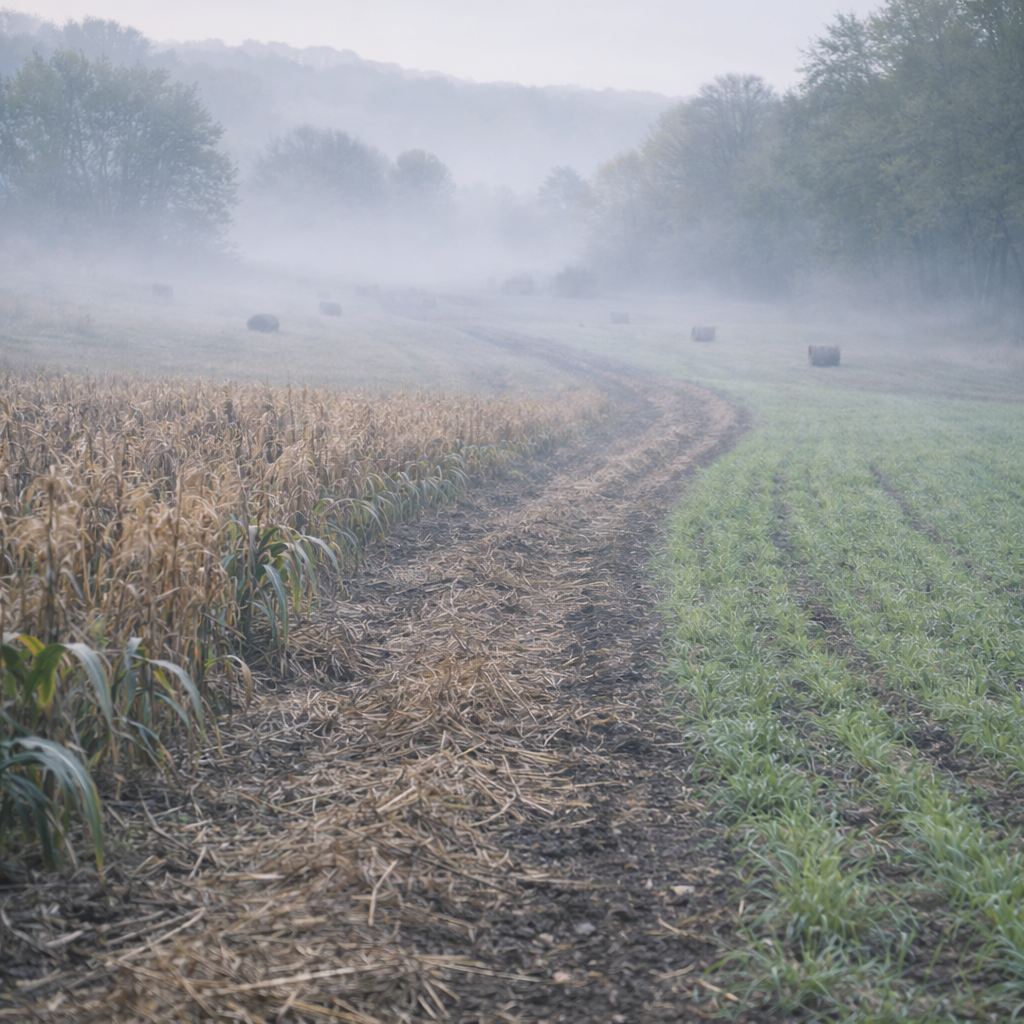
Protecting the soil surface remains a priority in grain sorghum fields. Residue from previous crops is retained where possible to reduce erosion, preserve moisture, and moderate temperature swings. Early-season surface condition is monitored closely to avoid unnecessary disturbance.
Field operations are limited when ground conditions increase the risk of compaction or structural damage. Visual uniformity is secondary to long-term soil function and trafficability.
Nutrient Inputs and Amendments
Nutrient management for grain sorghum is approached conservatively. Manure, lime, and similar amendments are applied selectively, informed by soil testing, field history, and observed response rather than routine schedules.
Chemical inputs, including herbicides, are used infrequently and only when conditions justify their use within this system. Weed pressure is evaluated as an indicator of timing, residue coverage, and field condition rather than treated as an isolated problem.
Weather and Variability
Grain sorghum is often chosen specifically because of weather variability. Heat, limited moisture, and shifting seasonal patterns influence both planting decisions and performance, and management adjusts accordingly.
Some years favor grain sorghum; others do not. Accepting this variability allows decisions to remain grounded in actual field conditions rather than forcing consistency where it does not fit.
Harvest and Use
Harvest timing is guided by crop maturity, weather outlook, and field condition. Protecting soil structure during harvest remains a priority, and timing is adjusted to avoid unnecessary damage.
Once harvested, grain sorghum is incorporated into livestock feeding programs alongside other grains and forage. Its use varies by species and season, reinforcing its role as a flexible support crop rather than a fixed component of rations.
Records and Field History
Grain sorghum fields are tracked alongside other crops and livestock using FarmBrite, with records documenting planting decisions, amendments, observations, weather context, and harvest outcomes. These records preserve field-specific context and inform future decisions.
Over time, accumulated field history helps determine whether grain sorghum remains appropriate for a given field or whether alternative use would better support long-term land function.
Grain Sorghum in a Long View
At Grey Barn Farm, grain sorghum is not grown for scale or consistency. Its value lies in adaptability and fit - how well it responds to conditions, supports livestock, and contributes to rotation and recovery over time.
Success is measured not by uniform stands or maximum output, but by whether fields remain resilient, predictable, and capable of supporting both crops and livestock across seasons.