Crops & Fields Overview
Rotations With a Reason
Annual crops are selected for how they fit into longer field sequences, supporting transitions between forage, rest, and recovery rather than standing alone as single-purpose plantings.
Multiple Uses
Fields are managed to supply feed, forage, and bedding within the same system, linking crop decisions directly to daily livestock care and seasonal needs.
Paced for Recovery
Timing and intensity are adjusted to protect soil cover and future options, allowing fields to respond to weather, use, and rest without being pushed beyond their capacity.
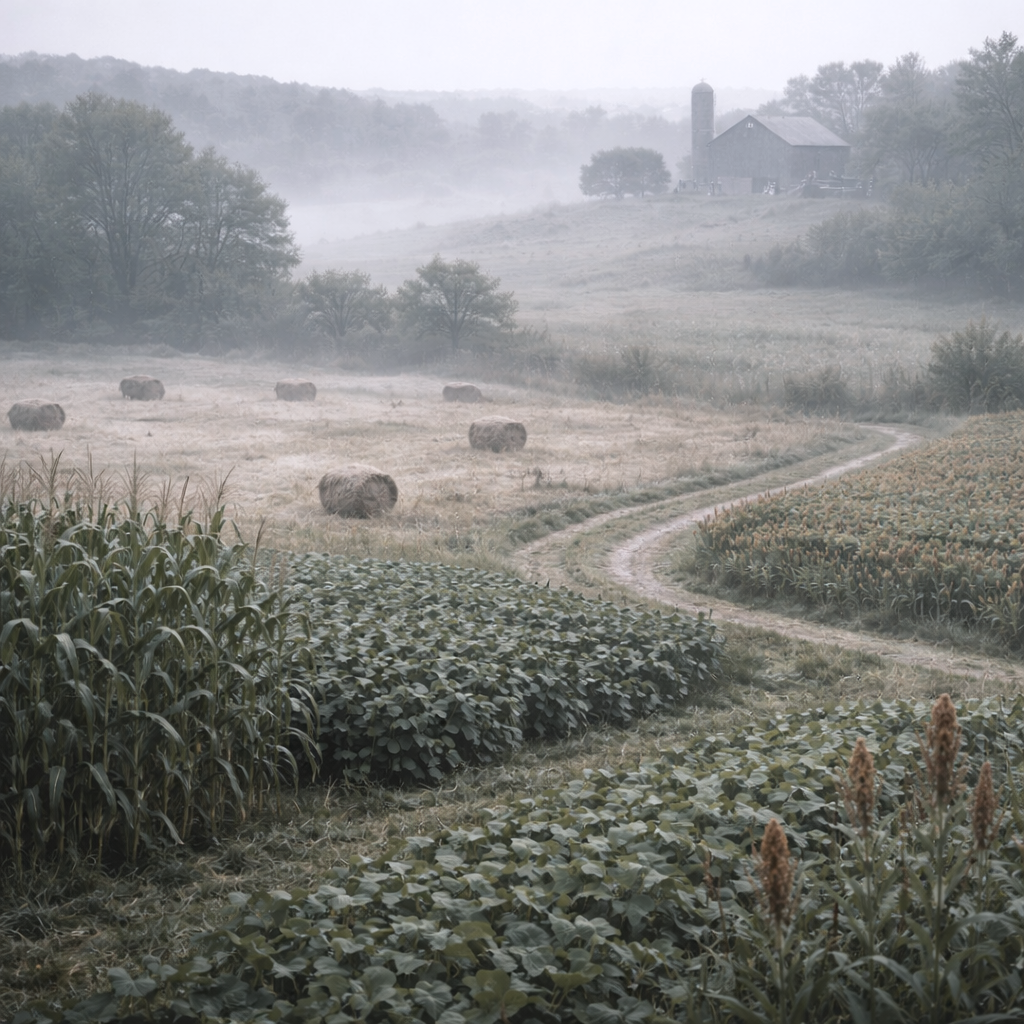
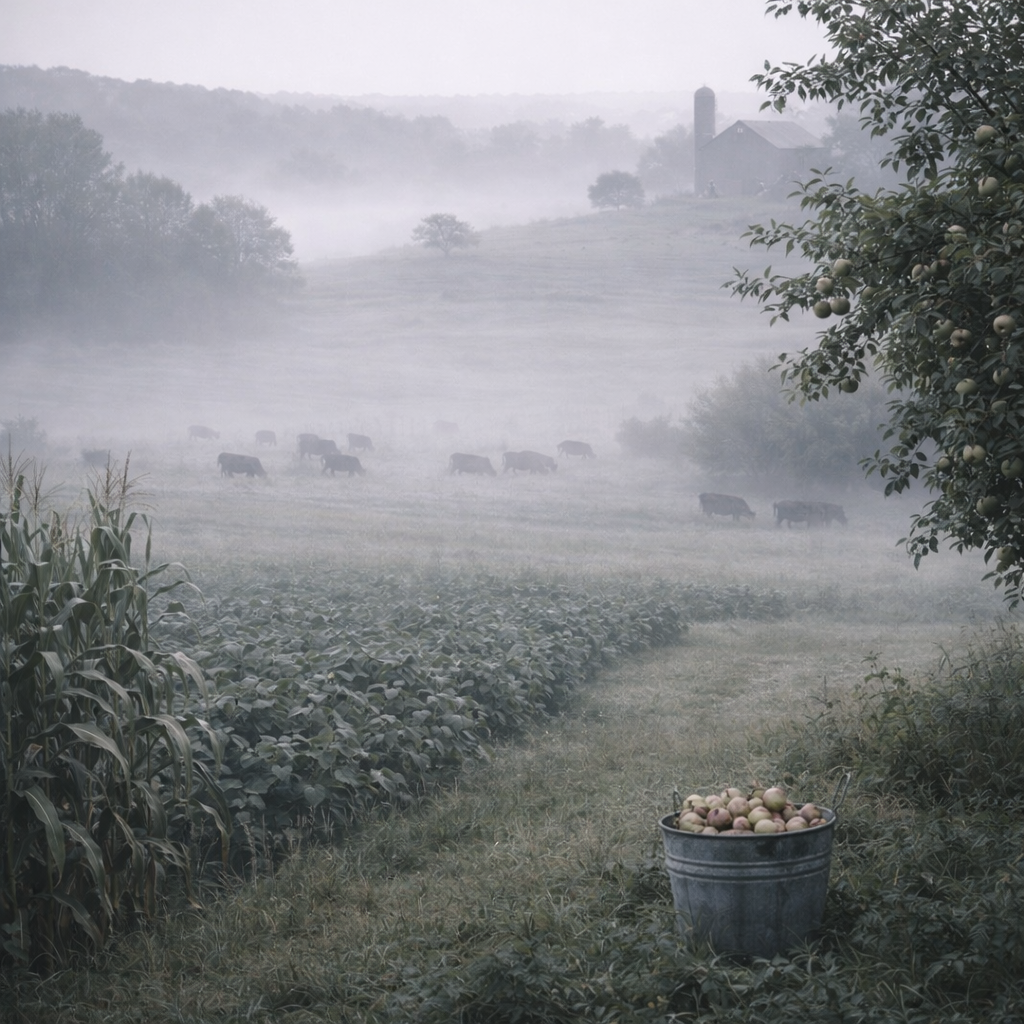
The farm's fields function as part of a livestock-centered system rather than as isolated production units. Some acres rotate through annual crops, others remain in forage or hay for extended periods, and some carry perennial plantings that shape the landscape year after year. Decisions are paced and responsive, shaped by field condition, weather, and animal needs rather than by fixed schedules.
This overview is meant to show how crops relate to one another across seasons. Individual pages describe specific uses, but at a whole-farm level the focus is on flexibility, continuity, and maintaining options from one year to the next.
Corn
Corn is used when it fits both the rotation and the year. Within the farm system, it primarily functions as a feed grain and a concentrated energy source for livestock. Because of its demands on timing and soil, placement is deliberate, and follow-on decisions emphasize cover and recovery rather than rapid turnover.
Soybeans
Soybeans contribute a different growth pattern and field footprint within the rotation. They are included for balance rather than dominance, helping spread workload and risk across seasons. In practice, soybeans remain one option among many, adjusted year to year based on conditions rather than treated as a fixed requirement.
Grain Sorghum (Milo)
Grain sorghum provides flexibility when shorter-season grains and durable field performance are priorities. Its role is shaped by timing, resilience, and how it supports the broader sequence rather than by yield alone. Sorghum widens the farm's options without forcing every field into the same pattern.
Hay
Hay forms a stable forage base within the system. Cutting and use are paced to protect regrowth and stand longevity, with attention given to long-term productivity rather than short-term output. Hay reduces pressure on pasture during tight windows and supports livestock through seasonal transitions.
Field Peas
Field peas are used primarily as early-season forage for cattle and goats. Their value lies in rapid establishment during transitional periods, when permanent pasture is still recovering or grazing pressure needs to be redistributed. Used intentionally, peas help bridge seasonal gaps without stressing longer-term forage resources.
Oats
Oats contribute across several needs within the farm. They are used as feed grain, can provide forage when conditions allow, and leave straw that is collected for animal bedding after harvest. This combination links field work directly to both nutrition and daily livestock management.
Fruit Trees
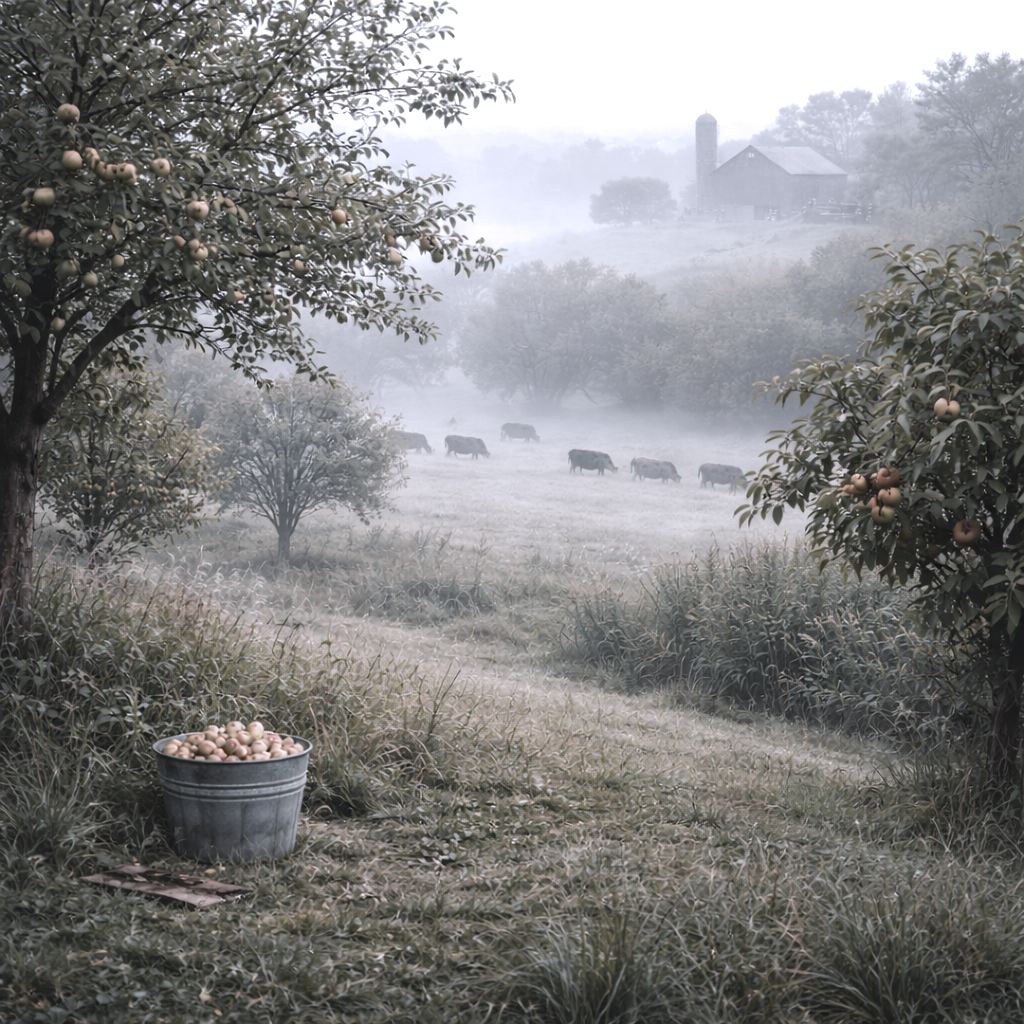
Fruit trees occupy a different role than rotating crops. Apples, peaches, pears, and cherries are actively managed for household use, including eating and baking. Mulberry and persimmon trees, found in some pastures and field edges, are retained with minimal intervention. Livestock - including goats, hogs, and poultry - freely consume fallen fruit, integrating these trees into seasonal feeding without a separate harvest process.
A Working, Evolving System
Taken together, the fields are managed as a working landscape rather than a collection of independent acres. Annual crops, forage, and perennial plantings each provide different forms of stability - flexibility in timing, continuity across seasons, and multiple uses that reduce waste. The goal is a system that remains functional under real conditions, year after year.