About Grey Barn Farm
Family Ownership & History
Grey Barn Farm is a family-owned farm that has remained in the same hands since approximately the early 1800s. Over more than two centuries, the farm has adapted to changing land use, regional conditions, and agricultural practices while maintaining a continuous commitment to long-term stewardship.
The farm's roots are in Bollinger County, Missouri, with later expansion into Montgomery County, Ohio. Today, operations span three locations across two states. Each site is managed with attention to its specific soils, climate, and constraints, rather than attempting to impose a single model across very different landscapes.
Land Use & Crop Integration
For much of its history, the farm's work centered on field production and forage management, with careful attention to soil structure, drainage, and seasonal conditions. In recent decades, the operation has shifted toward livestock as the organizing focus of the farm.Field production now primarily exists in support of animal systems. Crops such as corn, soybeans, hay, and grain sorghum are grown to meet feed and forage needs, creating an integrated relationship between land, crops, and livestock. This approach reflects a practical, closed-loop system in which each component supports the others rather than functioning in isolation.
Livestock Philosophy
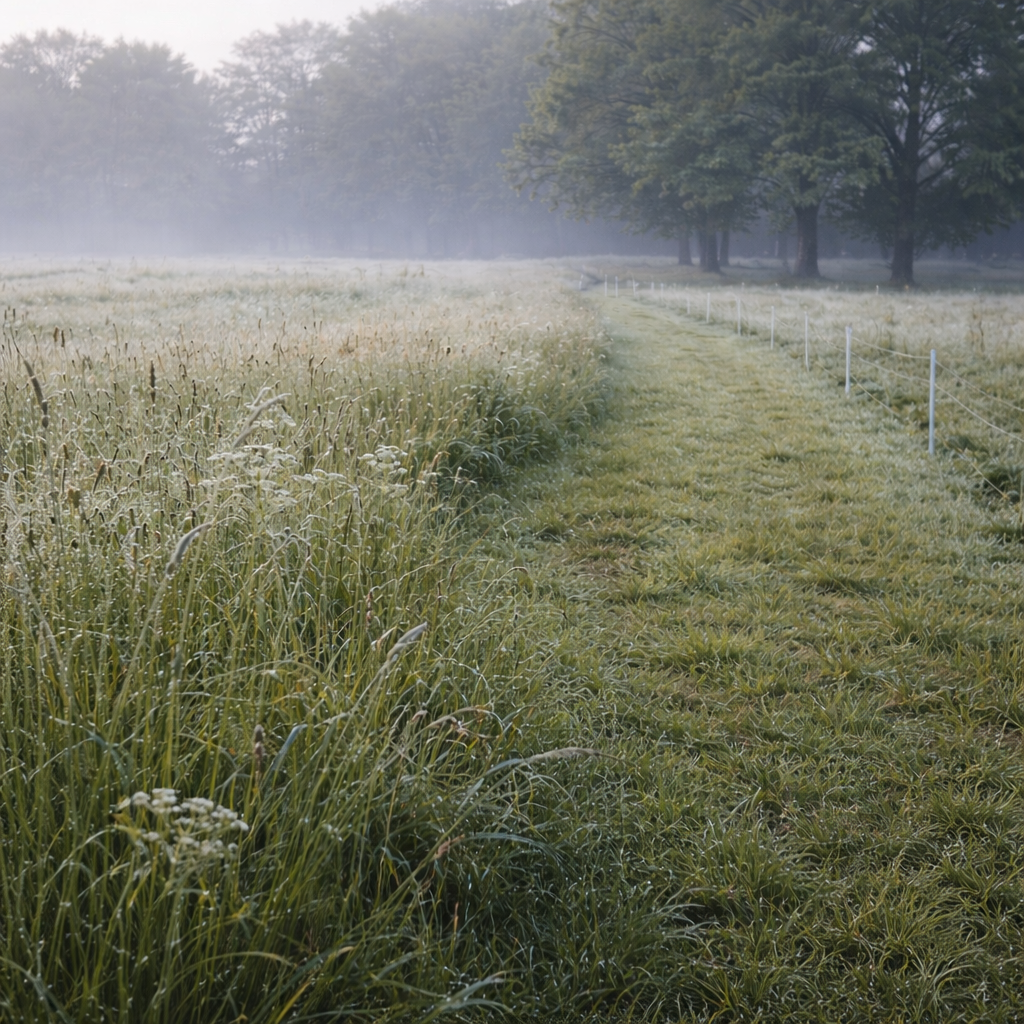
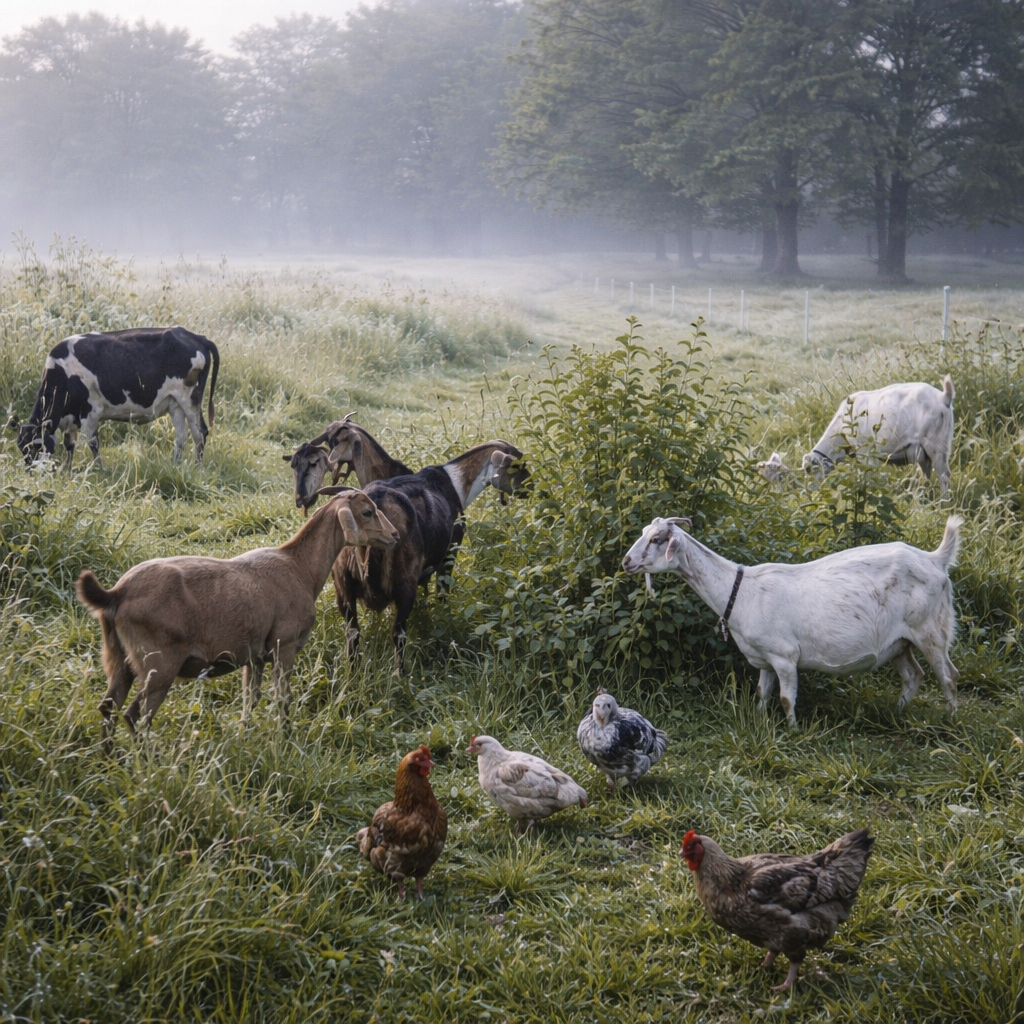
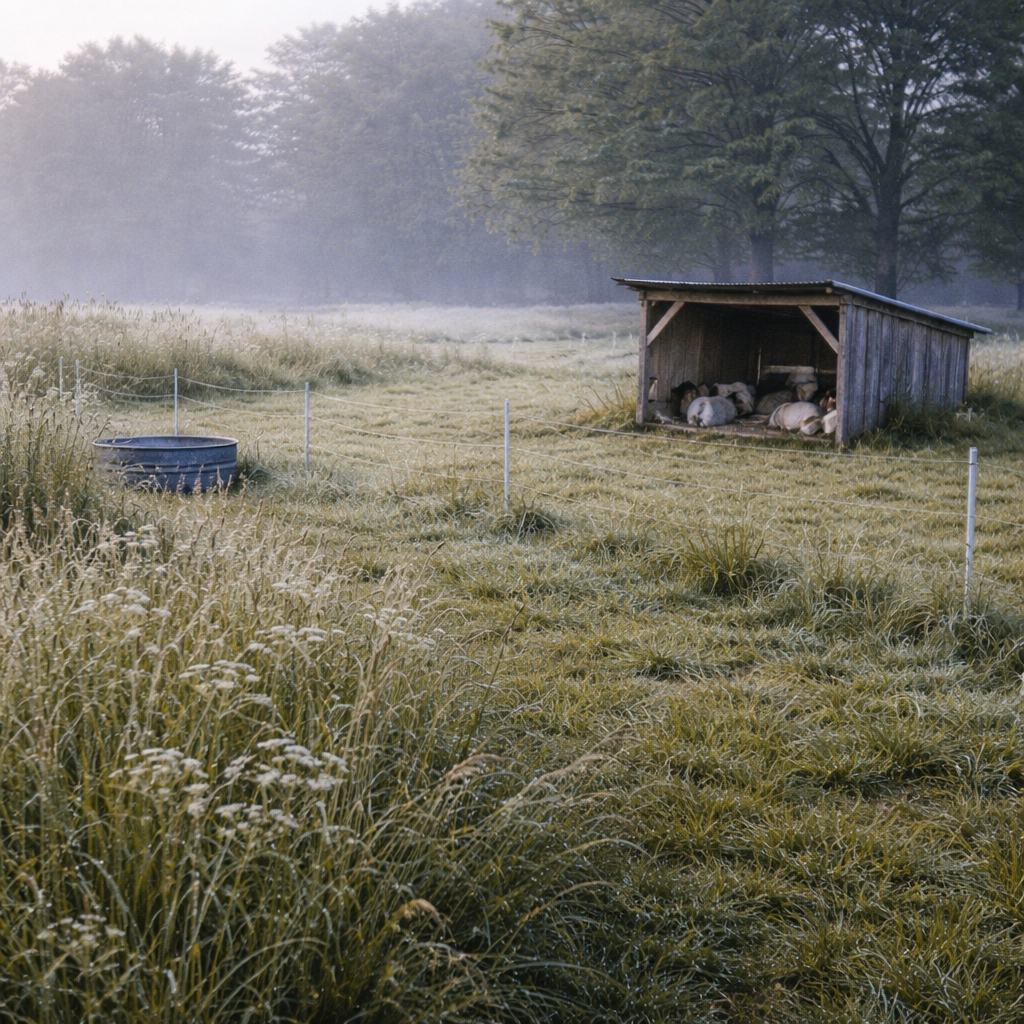
Livestock at Grey Barn Farm are kept with an emphasis on ethological best practices - designing systems that allow animals to express natural behaviors appropriate to their species. In practical terms, this means letting a cow be a cow, a goat be a goat, and a flock behave as a flock.Animals are maintained on large pastures with rotational movement and planned rest periods. Stocking density, movement timing, and infrastructure are shaped by observation and adjustment rather than rigid schedules. The goal is sound animal condition, reduced stress, and systems that function with minimal disruption.
Land Stewardship
Land stewardship at Grey Barn Farm is approached as an ongoing responsibility rather than a fixed set of techniques. Management decisions are informed by soil structure, forage recovery, weather variability, and animal behavior, with an emphasis on restraint and long-term outcomes.Mechanical and chemical inputs are used sparingly and deliberately, favoring biological processes, time, and recovery whenever possible. Pastures are rested, not pushed. Fields are managed with an eye toward resilience rather than maximum short-term output. These choices are intended to preserve both productive capacity and ecological function over generations.
Continuity & Practice
Across multiple generations and locations, Grey Barn Farm has remained guided by the belief that good farming is practical, observational, and patient. The farm's systems are shaped by experience, adjustment, and respect for limits rather than by scale or speed.By aligning land use with animal needs and working within the constraints of each landscape, Grey Barn Farm continues a family tradition of stewardship focused on durability, continuity, and responsible use of land and livestock.
In addition to this farm site, we maintain a separate Goat Care website that documents how our goats are managed day to day in our own setting, including routines, housing, feeding, breeding, and long-term observation. The Goat Care site is a descriptive record of practice rather than instruction or advice.