Fruit Trees
Fruit trees on the farm occupy a different role than rotating field crops. They are long-lived plantings that remain in place across years and seasons, shaping how land is used rather than responding to annual decisions. Their value emerges over time through growth, survival, and repeated interaction with people, livestock, and landscape. Management emphasizes continuity, resilience, and fit within the broader farm system rather than uniform production.
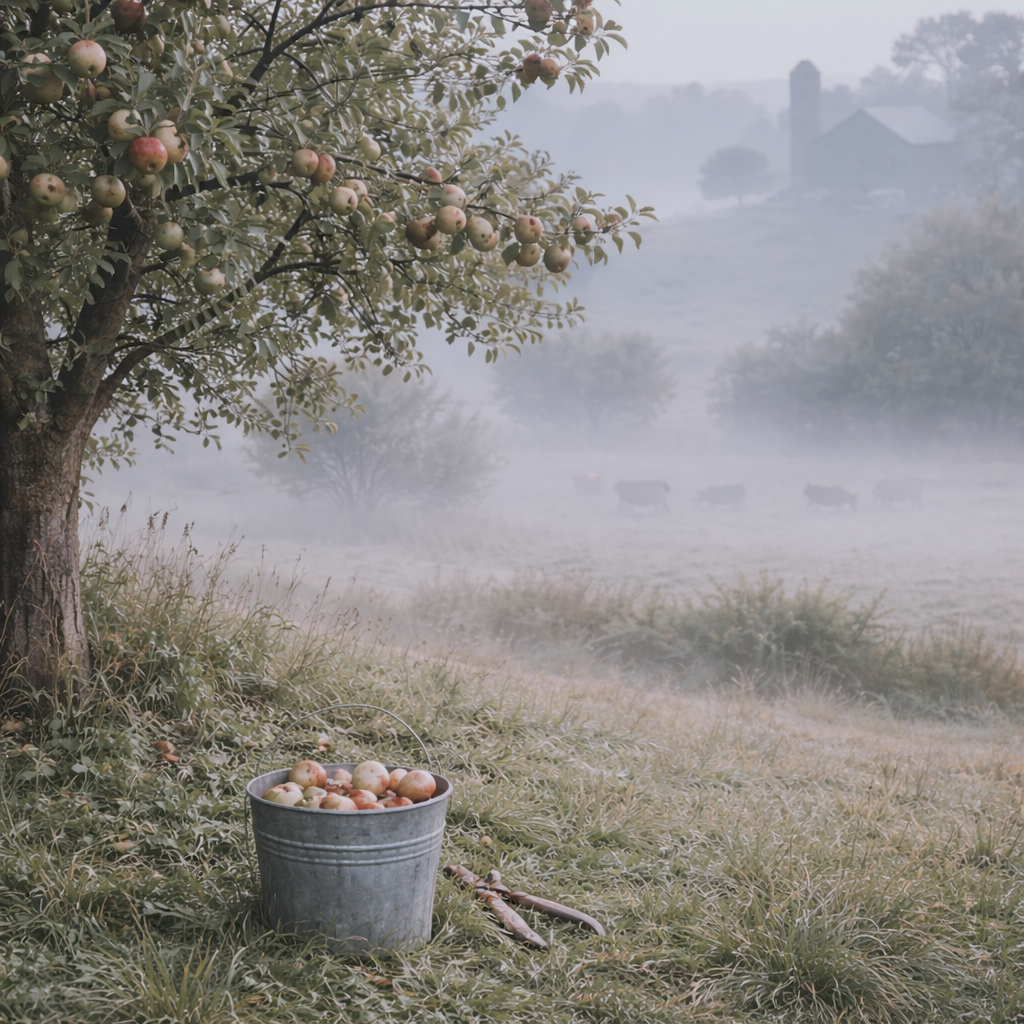
Apple, peach, pear, and cherry trees are planted and maintained for human use. These plantings are actively managed, with attention to establishment, structure, and long-term health. Harvests are used for fresh eating, baking, preserving, and other household purposes, with expectations shaped by weather, tree condition, and seasonal variability. Yields naturally fluctuate from year to year, and success is measured more by tree survival and steady function than by consistency or volume.
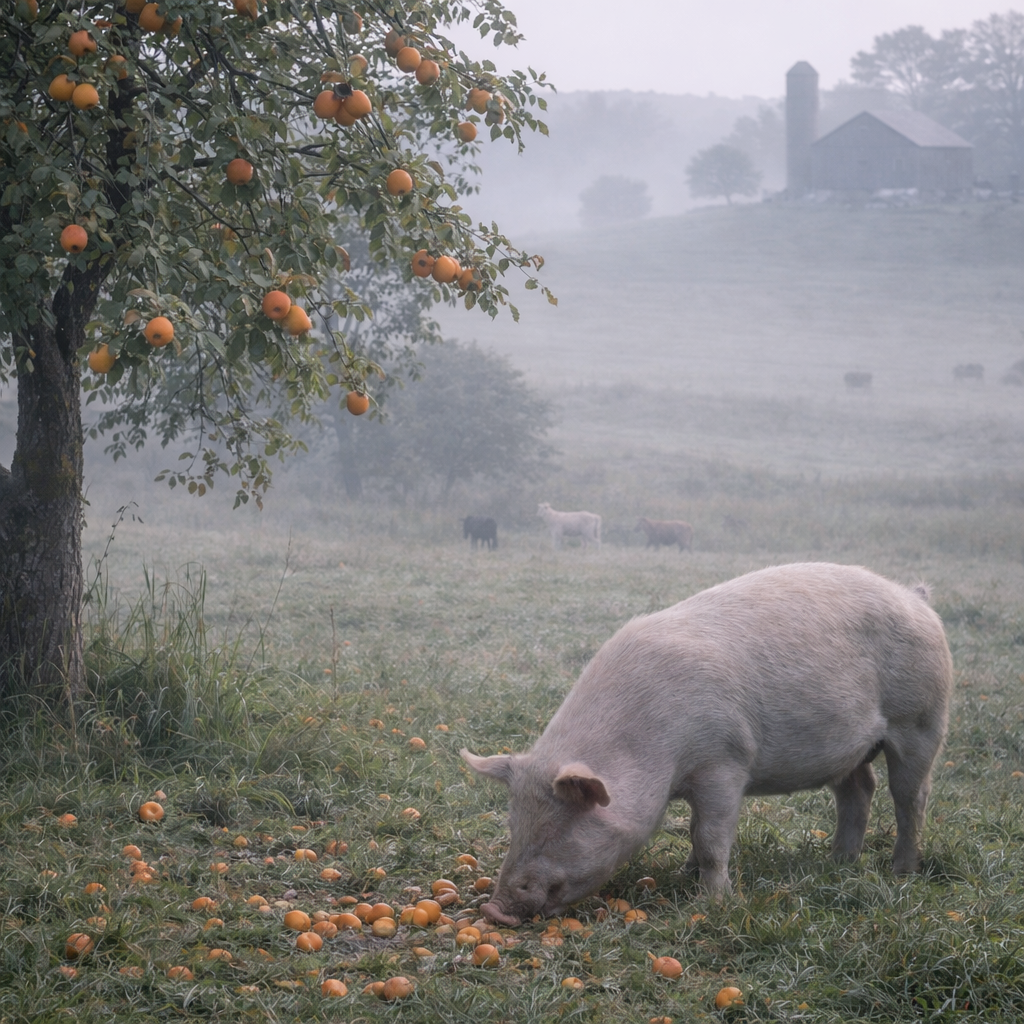
In contrast, mulberry and persimmon trees occupy a quieter role within pasture areas. These trees are retained where they already exist or allowed to persist where they fit naturally into the landscape. They are not intensively managed and are accessible to livestock during fruit drop. Goats, hogs, and poultry make use of fallen fruit as part of their normal foraging behavior, integrating the trees into daily animal movement without additional inputs or intervention.
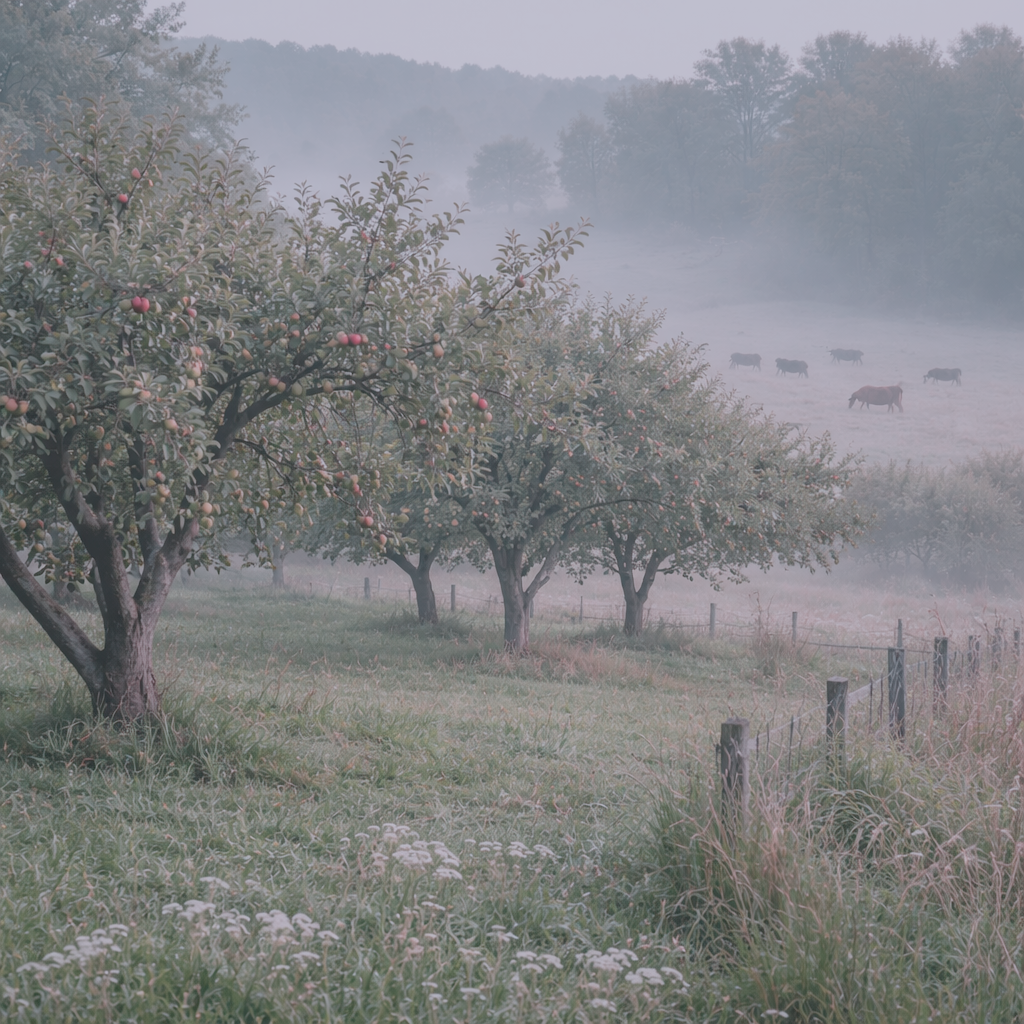
Fruit trees are placed along field edges, in dedicated orchard areas, and in clusters where terrain, soil, and access make sense. Their locations reflect long-term considerations - air flow, frost patterns, drainage, and interaction with surrounding land uses - rather than short-term convenience. Over time, these plantings create stable features within the farm, influencing how adjacent spaces are grazed, accessed, or left undisturbed.
Management across all fruit trees is deliberately low-input. No spraying is used. Pruning and care focus on structural integrity, survival, and longevity rather than cosmetic perfection. Trees that thrive continue forward; those that struggle inform future decisions about placement and variety. Records and accumulated observations guide adjustments, but variability is expected and accepted as part of working with perennial systems.
Together, fruit trees contribute to food production, livestock support, and landscape structure in ways that differ fundamentally from annual crops. Their presence reinforces the farm's emphasis on layered use, patient management, and systems that mature over time rather than resetting each season.